
Dress Size Calculator: What Size Dress Am I?
Enter your bust, waist and hips and get your size in US, UK, EU, Australian and Indian sizing, adjusted for your body shape, the dress style and how you like things to fit.
The 30-second answer
Your dress size depends primarily on your bust, waist and hip measurements, not on your height or weight alone. The Calqulate.net Dress Size Calculator compares your measurements against US, UK, EU and Indian sizing standards while adjusting for body shape, dress style and fit preference. Instead of showing one number, it recommends the size most likely to fit comfortably across different brands.
3
Measurements
Bust waist hips
5
Size systems
US UK EU AU IN
Shape
Aware
Not just numbers
Brand
Adjusted
Zara to Shein
100%
Private
In-browser
Your personal shopping assistant
Not a size chart. Tell it the occasion, the brand and the fabric, and it will tell you which size to actually order, and why.
Calqulate Shopping Assistant
Step 1 of 7
Hello. Let's find the size that will actually fit you. First, what are you shopping for?
What dress size am I?
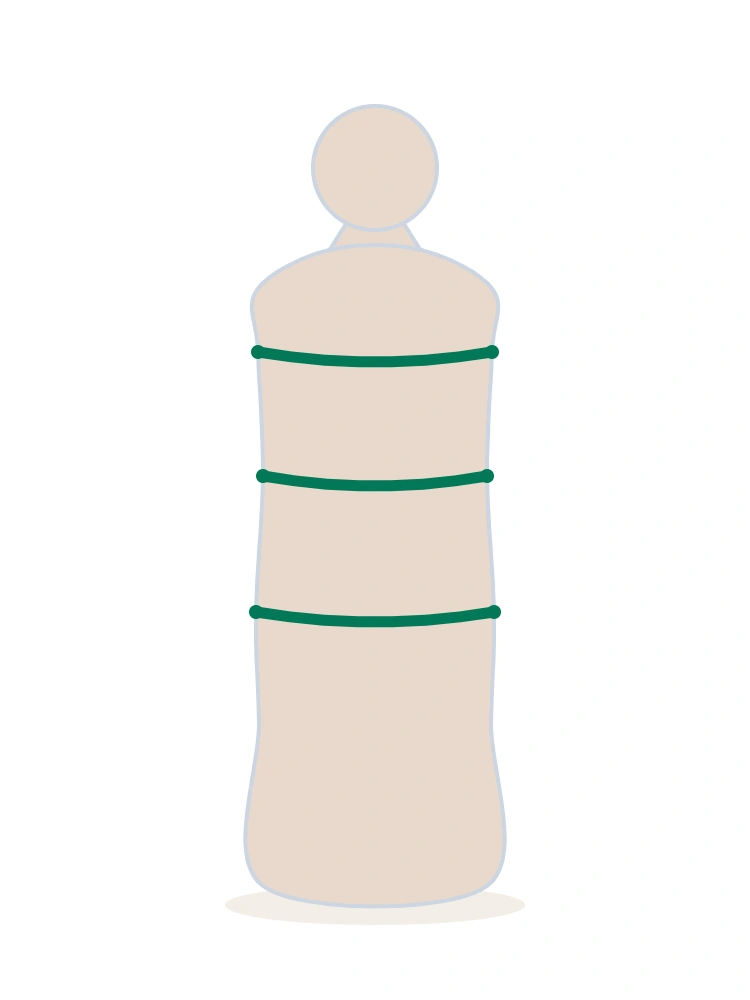
The fastest way to find your dress size is by measuring your bust, waist and hips. Those three numbers are what every size chart in the world is built around. Height and weight are not, which is why a friend who weighs the same as you can wear a different size.
Unlike a basic size chart, the Calqulate.net Dress Size Calculator compares multiple sizing systems and explains why a recommendation was made, taking your body shape, the dress style and your fit preference into account.
How your dress size is decided
A size chart uses three numbers. A good recommendation uses five inputs.
How to measure yourself for the perfect dress size
Three measurements, five minutes, and a soft tape. Getting these right is the single highest-value thing you can do to stop dresses going back.
How to measure yourself in 3 steps
Use a soft fabric tape. Measure over bare skin or thin clothing, and take each measurement twice.
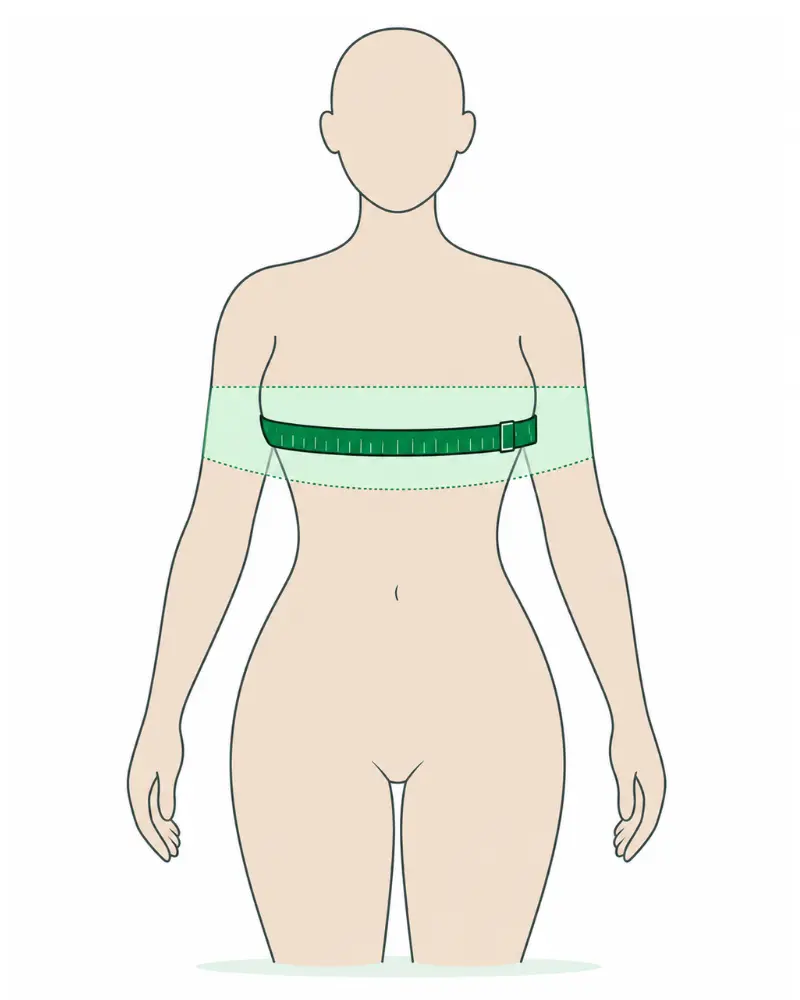
1Bust
Wrap the tape around the fullest part of your chest, keeping it level under your arms and across your shoulder blades. Wear a non-padded bra and breathe normally. Do not pull tight.
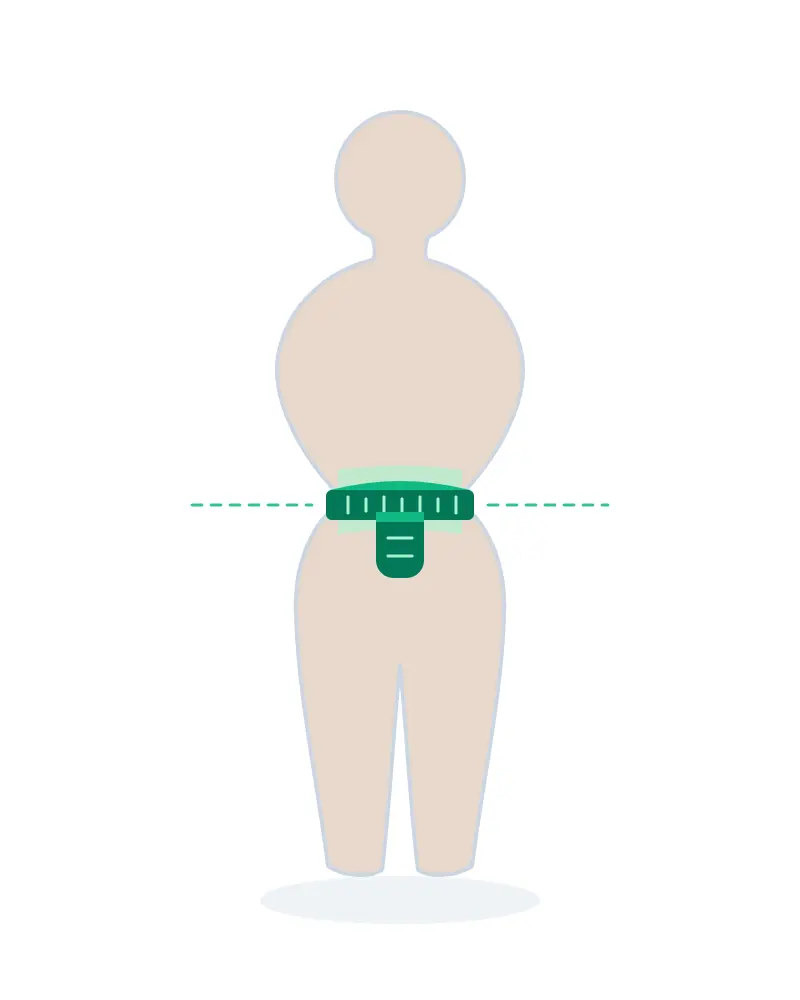
2Waist
Find your natural waist, the narrowest part of your torso, usually just above the navel. Bend to one side and the crease that forms is your waist. Keep the tape snug, not tight, and do not suck in.
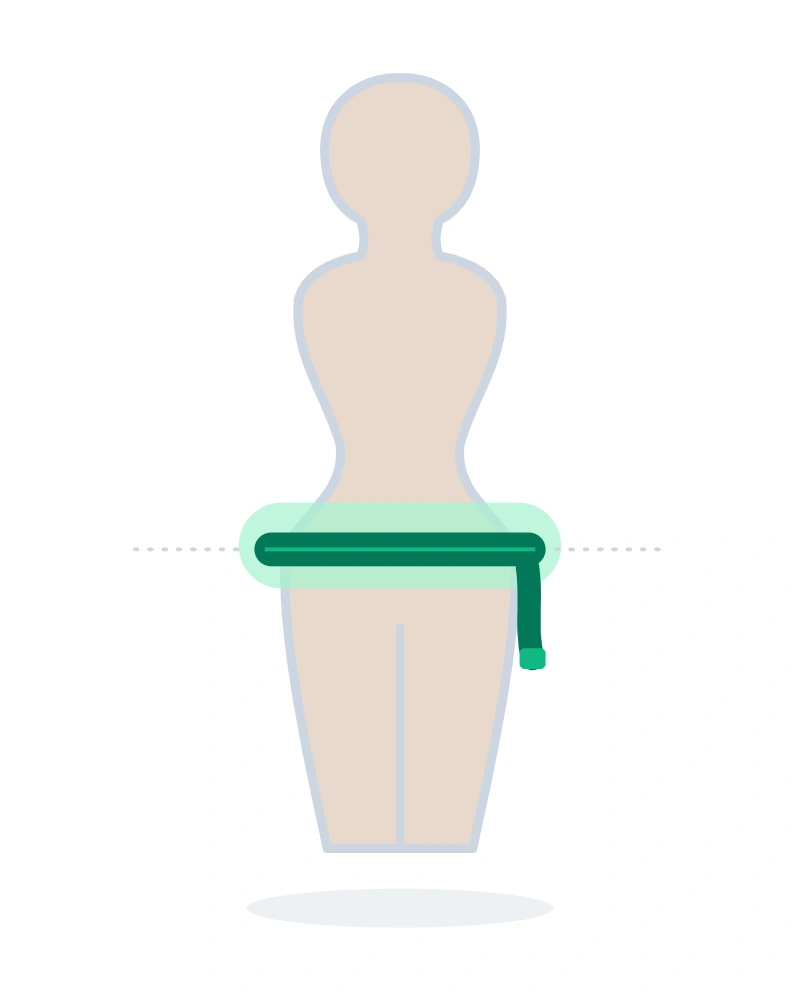
3Hips
Stand with your feet together and measure around the widest part of your hips and seat, usually about 7 to 9 inches below your natural waist. Keep the tape parallel to the floor.
The rule that saves returns: if your three measurements land in different sizes, buy for your largest measurement and have the rest taken in. Letting a seam out is much harder than taking one in.
Can height and weight predict your dress size?
Height and weight can estimate a likely dress size, but they cannot replace body measurements. Two women with the same height and weight can wear different dress sizes because of differences in bust, waist and hip proportion, muscle mass, and how each brand grades its patterns.
What actually predicts your dress size
- Bust, waist and hips
Measures the body the size chart is actually built around.
- Bust, waist, hips plus body shape
Adds where your width sits, which decides fit far more than totals.
- Height and weight
A reasonable estimate, but blind to your proportions.
- Weight only
Two women at the same weight routinely wear sizes two apart.
- Guessing from your last purchase
Only reliable within one brand, and only until they re-grade.
For the most accurate recommendation, use the calculator with your actual bust, waist and hip measurements rather than height and weight alone.
Why two women with the same height and weight wear different sizes
This is the misconception behind most bad online orders. Weight is a total. A dress is cut to a shape.
Same height. Same weight. Different dress size.
Both women are 165 cm and 60 kg. A height and weight calculator would hand them the same answer. It would be wrong for one of them.
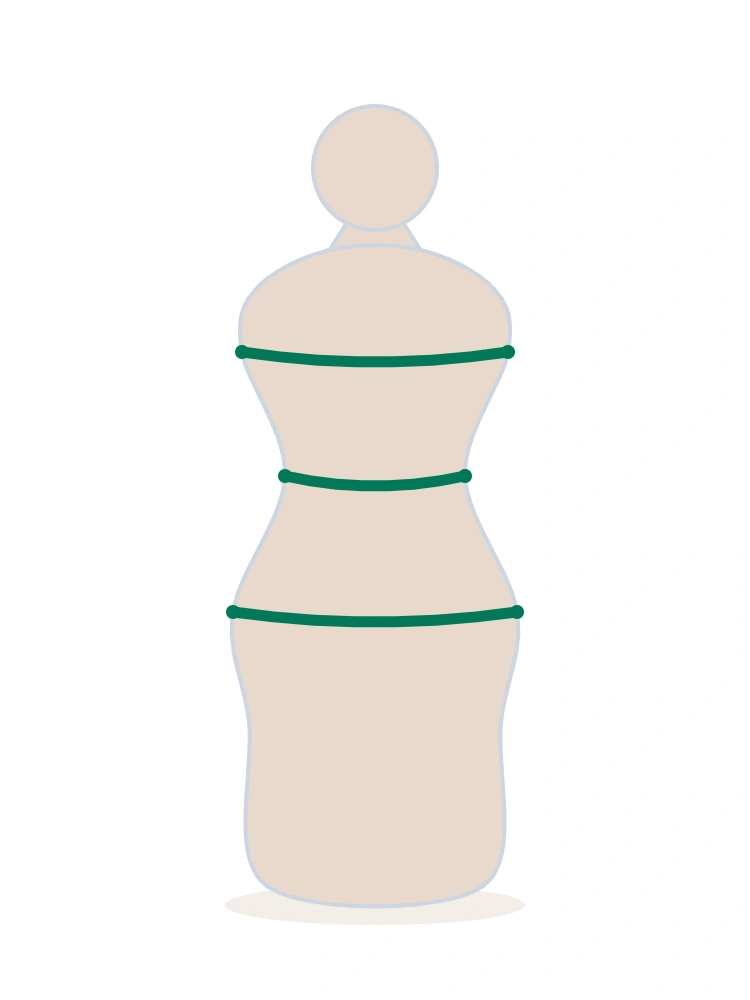
Woman A
US 8Hourglass · 165 cm · 60 kg
bust
36"
waist
28"
hips
38"
Woman B
US 10Rectangle · 165 cm · 60 kg
bust
35"
waist
32"
hips
36"
Why the sizes differ
- Waist is the deciding measurement on most fitted dresses, and there is a 4 inch gap between them.
- Woman A's bust to waist difference gives her a defined waist a dress can be cut to.
- Woman B carries her width more evenly, so a size 8 pulls at the waist even though the bust fits.
- Muscle sits denser than fat, so identical weight can mean a smaller frame.
- Brand grading then moves both of them again, by up to a full size.
Not sure which you are? Start with the Calqulate.net Body Shape Calculator, then come back and size with confidence.
US, UK, EU and India dress size conversion
A US 8 is a UK 12 and an EU 40. The rule of thumb is that UK sizes run four numbers above US, and EU sizes run thirty-two above US. Tap any size below to convert it instantly and see the measurements behind it.
Dress size converter: US, UK, EU, AU and India
Pick the size you normally wear and see it in every system, along with the measurements it is built around.
US
8
UK
12
EU
40
Australia
12
India
M / 38
Bust
35 to 36"
Waist
28 to 29"
Hips
38 to 39"
These are standard conversions. Individual brands still grade their own way, which is why the same US 8 can fit differently at two shops on the same street.
Why Zara, H&M, Shein and ASOS all fit differently
There is no law that defines a dress size. Each brand fits its patterns to its own house model, then grades up and down from there. That is why you can hold three dresses in three different sizes and all three fit.
Why the same size fits differently at every brand
There is no legal standard for a dress size. Each brand grades to its own fit model, which is why your wardrobe holds three different sizes that all fit.
- ZaraRuns smallSize up, especially in dresses and anything tailored.
- H&MRuns smallSize up. Their EU grading is narrow through the waist.
- SheinRuns very smallSize up one, sometimes two. Always check the item's own measurements, not the label.
- ASOS DesignTrue to sizeTheir own label is consistent. Third-party brands on ASOS are not.
- MangoRuns smallSize up if you are between sizes or busty.
- Old Navy, GapRuns largeOften size down. Vanity sizing is common in US high street.
- Boohoo, PrettyLittleThingRuns smallSize up, and expect heavy variation between individual items.
Guidance based on published brand size charts and widely reported shopper experience. Brands re-grade regularly, so always check the garment measurements on the product page.
Should you size up or size down when you are between sizes?
There is no universal rule, and anyone who gives you one is guessing. The right answer depends on the fabric and the cut. Answer two questions and you will know.
Between two sizes? Answer two questions.
There is no universal rule. The right answer depends entirely on the fabric and the cut.
Does the fabric have stretch?
Look for elastane, spandex, jersey or knit on the label.
Dress size by body shape
Your measurements say what size. Your shape says which size actually fits, and which styles are worth buying. If you are not sure which shape you are, start with the Calqulate.net Body Shape Calculator, then come back here.
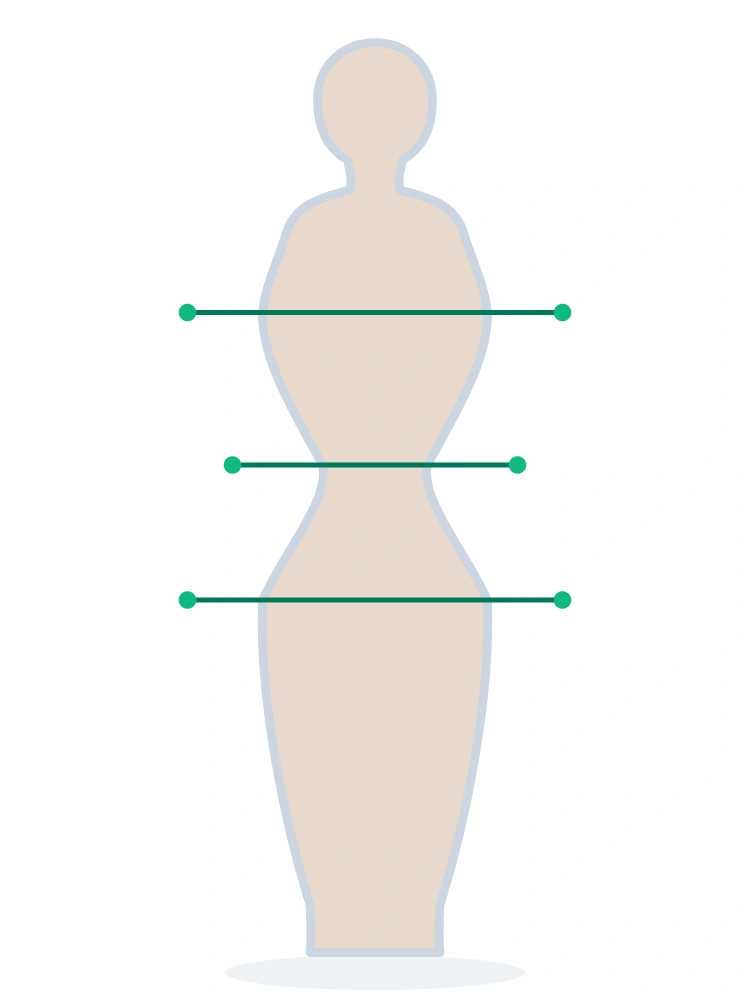
Hourglass
- Best:
- Wrap, bodycon, fit and flare, belted
- Avoid:
- Shapeless shift and boxy cuts that hide the waist
- Sizing:
- Size to your bust or hips, whichever is larger, then have the waist taken in.
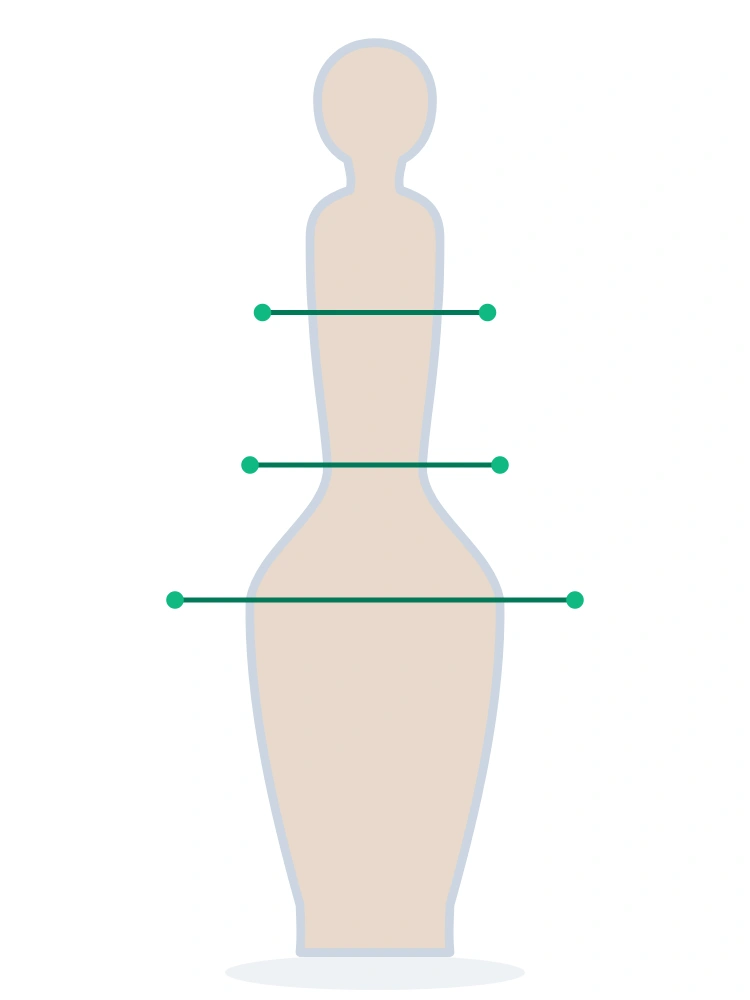
Pear
- Best:
- A-line, fit and flare, off shoulder, statement necklines
- Avoid:
- Tight pencil skirts and clingy fabric across the hip
- Sizing:
- Size to your hips. The bust will almost always need taking in.
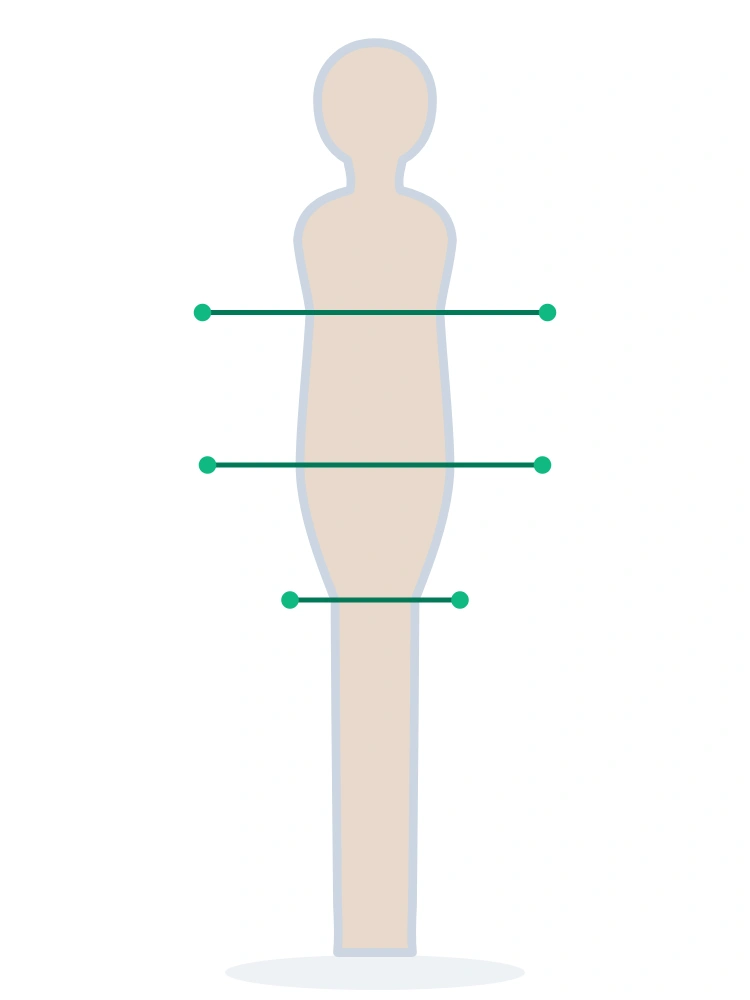
Apple
- Best:
- Empire waist, wrap, A-line, structured V necks
- Avoid:
- Bodycon and anything with a tight waistband
- Sizing:
- Size to your bust. Look for an empire line that skims rather than cinches.
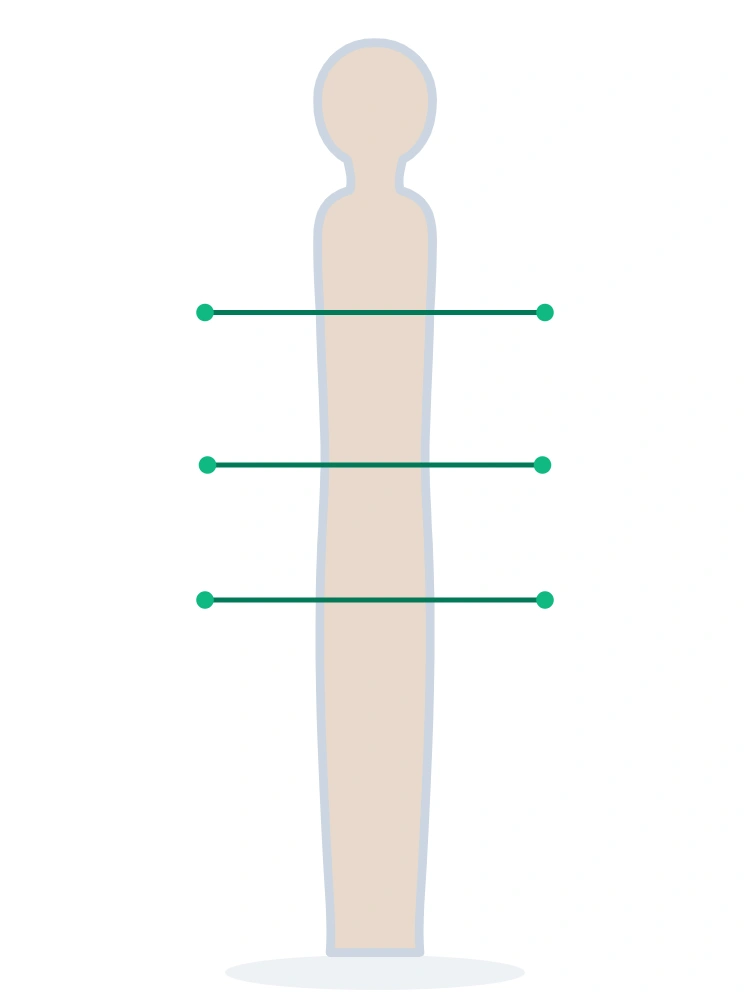
Rectangle
- Best:
- Peplum, ruffles, belted, sheath with detail at the waist
- Avoid:
- Straight shift dresses with no shaping
- Sizing:
- Your three measurements are close, so you usually fit one clean size. Add a belt for shape.
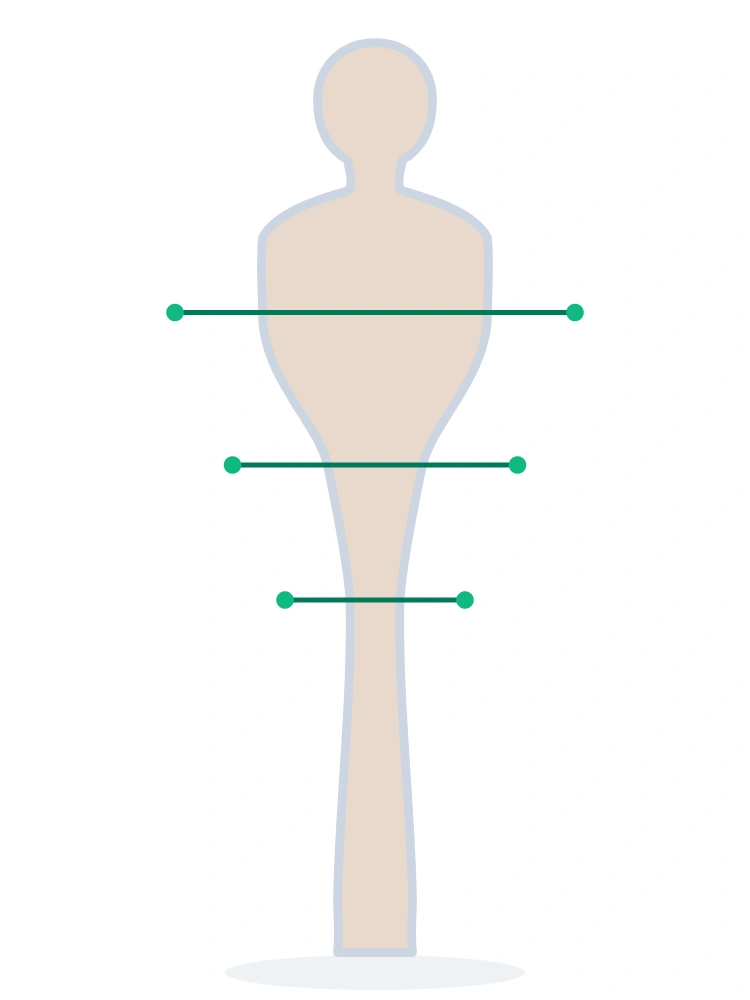
Inverted triangle
- Best:
- A-line, full skirts, V necks, anything that adds volume below
- Avoid:
- Shoulder detail, puff sleeves, halter necks
- Sizing:
- Size to your bust and shoulders, then take in the waist and hip.
Dress length by height
Size and length are two different problems. A dress can fit perfectly and still be the wrong length, because brands cut to a sample model who is usually around 5 feet 8.
Dress length by height
Size controls the fit. Height controls where the hem lands. A midi on a 5 foot frame is a maxi on someone else.
Under 5'2" (petite)
Mini
31 to 33"
Midi
41 to 43"
Maxi
52 to 54"
Midi often reads as maxi. Look for petite ranges.
5'2" to 5'5"
Mini
33 to 35"
Midi
43 to 45"
Maxi
55 to 57"
Standard sizing usually works as designed.
5'6" to 5'8"
Mini
34 to 36"
Midi
45 to 47"
Maxi
57 to 59"
The height most brands cut their samples for.
5'9" and over (tall)
Mini
36 to 38"
Midi
47 to 49"
Maxi
60 to 62"
Standard maxi often lands at the ankle. Seek tall ranges.
Lengths are measured shoulder to hem, the way most brands list them on the product page.
Wedding dress size guide
Bridal sizing is its own world, and it will shock you if nobody warns you. It typically runs one to two sizes smaller than high street, so a street size 8 is commonly a bridal 10 or 12. This is not a comment on your body. It is a hangover from decades-old bridal patterns.
Order to your largest measurement
Almost always the bust. A bridal seamstress can take a dress in easily. Letting one out is often impossible, because there is no seam allowance to work with.
Budget for alterations
Nearly every wedding dress is altered. Treat alterations as part of the price, not as a failure of sizing.
Order early
Made-to-order gowns commonly take four to six months, plus six to eight weeks for fittings. Ordering late is what forces bad size decisions.
Do not order to a goal weight
Order for the body you have. A dress can be taken in at a final fitting. It cannot be conjured larger.
Why dresses get returned
Fit is the single biggest reason clothing goes back, and it is almost entirely avoidable. Knowing where orders fail tells you exactly what to check before you click buy.
Why dresses actually get returned
Fit is the single biggest reason clothing goes back. These are the causes, ranked by how often they come up.
- Bust did not fitMost common
The most common single failure. Bust is the hardest area to alter and the first place a dress pulls.
- Waist did not fit
Often because the buyer sized to their bust and ignored a smaller waist.
- Brand ran small or large
The size on the label matched, but that brand grades differently.
- Fabric had no give
A woven, non-stretch dress in a size that would have worked in jersey.
- Length was wrong
Especially midi and maxi dresses on petite and tall frames.
Ranked by how frequently each cause is reported in apparel fit research and retailer returns guidance. Treat the bars as a relative ranking, not exact percentages.
Petite, tall and plus size ranges
Petite
For roughly 5 feet 3 and under. Not a smaller size, but the same size cut with a shorter torso, a higher waist and a shorter hem. If dresses always look like they are wearing you, this is why.
Tall
For roughly 5 feet 9 and over. Longer torso, longer sleeves, longer hem. A standard maxi that lands at your ankle is the clearest sign you should be shopping tall.
Plus size
Typically US 14 and up. Grading is not simply scaled up, so measurements matter even more. Always check the garment measurements rather than trusting the label.
How we determine your dress size
We map your bust, waist and hip measurements onto standard apparel size charts, which are built on the same body dimensions used in the ISO and ASTM apparel sizing standards. Where your three measurements fall into different sizes, we recommend the larger, because taking a garment in is a routine alteration while letting it out often is not. We then adjust for body shape, dress style and fit preference, and convert the result across US, UK, EU, Australian and Indian systems. We do not store your measurements, and nothing leaves your browser.
No sizing standard is legally binding on brands. Treat any calculated size as a strong starting point, and always check the garment measurements published on the product page before ordering.
Sources and references
This page is built from public clinical guidance and peer-reviewed research. Always confirm decisions with a licensed clinician.
Common dress size questions
Frequently Asked Questions
Common questions and answers about this calculator.
What size dress am I?
Your dress size is decided by your bust, waist and hip measurements, not by your height or weight. Measure all three, then match your largest measurement to a size chart. A US 8 typically fits a 35 to 36 inch bust, a 28 to 29 inch waist and a 38 to 39 inch hip. Brand grading then moves that by up to a full size either way.
How do I know my dress size without trying anything on?
Take three measurements with a soft tape: bust at the fullest point, waist at the narrowest point, and hips at the widest point. Enter them into the calculator on this page. If the three land in different sizes, buy for the largest one, because taking a seam in is far easier than letting it out.
Can height and weight predict my dress size?
They can estimate it, but they cannot replace measurements. Two women who are both 165 cm and 60 kg can wear sizes two apart, because dress sizing is built around bust, waist and hip proportions rather than total mass. Use height and weight only as a rough starting point.
What is a US 8 in UK and EU sizes?
A US 8 is a UK 12, an EU 40, an Australian 12, and roughly an M or 38 in India. The measurements behind it are about a 35 to 36 inch bust, a 28 to 29 inch waist and a 38 to 39 inch hip.
Should I size up or size down if I am between sizes?
It depends on the fabric and the cut. If the fabric has stretch and the style is relaxed, size down, because it will give as you wear it. If the fabric is woven with no stretch and the dress is structured or fitted, size up and have it taken in. For a stretchy bodycon, stay true to size.
How should I measure my bust, waist and hips?
Bust: around the fullest part of your chest, level under the arms, wearing a non-padded bra. Waist: the narrowest part of your torso, usually just above the navel. Hips: the widest part of your hips and seat, about 7 to 9 inches below your waist. Keep the tape snug but never tight, and do not hold your breath.
Why does the same dress size fit differently at Zara, H&M and Shein?
Because there is no legal standard for a dress size. Every brand grades to its own fit model. Zara and H&M generally run small, Shein runs very small, and US high street brands like Old Navy often run large. Always check the garment measurements listed on the product page rather than trusting the size label.
What size wedding dress should I order?
Bridal sizing typically runs one to two sizes smaller than high street, so a street size 8 is often a bridal 10 or 12. Always order to your largest measurement, usually the bust, and budget for alterations. Nearly every wedding dress is altered, and taking a dress in is routine while letting it out may be impossible.
Does body shape change my dress size?
It does not change the number on the label, but it changes which size actually fits and which styles work. A pear shape sizes to the hip and takes the bust in. An apple sizes to the bust and looks for an empire line. Two women with the same bust measurement can need different sizes because of where the rest of their width sits.
What dress length should I wear for my height?
Under 5 feet 2 inches, a standard midi often falls like a maxi, so look for petite ranges. Between 5 feet 2 and 5 feet 8, standard lengths usually work as designed. At 5 feet 9 and above, a standard maxi frequently lands at the ankle rather than the floor, so tall ranges are worth seeking out.
What is the most common reason dresses get returned?
Fit, and specifically the bust. It is the hardest area to alter and the first place a dress pulls. Waist comes second, usually because the buyer sized to their bust and ignored a smaller waist. Buying for your largest measurement and checking the brand's own garment measurements removes most of that risk.
You may also like
Your measurements are private. Nothing is stored and nothing leaves your browser.
Advertisement
Related Appearance Calculators
Explore the rest of our appearance tools — each one adds a different piece of the picture.
Tool Information
August 2026
Dr. Jaydeep Sanghani
Meet Akabari

Dr. Jaydeep Sanghani
MBBS, MD, DNB(Anaesth.), PDCC(CCM), DrNB(CCM)
AIIMS Bhubaneswar · AIIMS Rishikesh
Critical care specialist and anesthesiologist with advanced training from AIIMS. Reviews health calculators at Calqulate to ensure medical accuracy and evidence-based standards.
About the authors